Why UK Cafés and Offices Are Rethinking Their Coffee Bean Budget in 2026
The past two years have been extraordinarily difficult for UK businesses that rely on coffee. Between June 2023 and December 2025, Arabica futures rose by more than 80%, reaching their highest level since 1977, according to the International Coffee Organization’s Monthly Coffee Market Report (December 2025). Robusta prices, widely used in hospitality blends, saw an even sharper rise, up 92% year-on-year by late 2024.
The drivers behind this surge were global in scale. Prolonged drought in Brazil, the world’s largest Arabica producer, combined with erratic rainfall and typhoons disrupting harvests in Vietnam, the leading Robusta producer, created significant supply shortfalls across two consecutive growing seasons. At the same time, attacks on commercial shipping in the Red Sea forced major carriers to divert around the Cape of Good Hope, adding two to three weeks to transit times and pushing European logistics costs up by over 30% (ICO Annual Review 2024/25).
For UK buyers, the impact was direct. According to Lumina Intelligence’s UK Coffee Market Report (August 2025), the average price of coffee in UK shops rose by 17% between 2022 and August 2025. The UK out-of-home coffee market reached £6.1 billion in turnover in 2024/25, but that growth was driven largely by price increases rather than increased volume. (Lumina Intelligence: lumina-intelligence.com)
Some relief has arrived in early 2026. The ICO Composite Indicator Price averaged 267.57 US cents per lb in February 2026, a 9.9% decrease from January 2026, driven by improved supply forecasts for Brazil (ICO Coffee Market Report, February 2026). The World Bank’s Commodity Markets Outlook (October 2025) forecasts a further easing of beverage commodity prices through 2026 as global supply recovers.
What matters most for UK buyers right now is this: do not expect those commodity savings to reach your invoice anytime soon. The British Coffee Association has cautioned that retail prices are unlikely to follow commodity markets down quickly, with energy, labour and packaging costs continuing to run 10 to 15% higher year-on-year. (British Coffee Association: bca.org.uk) The savings visible at green bean level are being absorbed well before they reach the end buyer. For hospitality businesses and offices managing tight margins, waiting for the market to correct is not a strategy. Buying smarter, right now, is.
Cheap vs Premium: Why UK Coffee Buyers Are Stuck Between Two Bad Options
That cost pressure is pushing UK buyers toward a decision that most of them are making on incomplete information. The market appears to offer two paths, and neither is quite right.
At one end sit the industrial bulk suppliers, high volume, low price, but with a warehouse feel and quality that rarely matches the promise on the bag. At the other end sit the specialty roasters, genuinely excellent coffee, beautifully packaged, with sourcing stories and barista credentials that justify prices of £20 to £26 per kilo and minimum orders that strain smaller budgets.
Most buyers pick one or the other based on what they think they can afford. The hospitality operator watching margins tighten often defaults to the cheapest option available, accepting a drop in cup quality as an unavoidable trade-off. The quality-conscious office manager pays a premium for a specialty brand, absorbing costs that have only increased as the market pressures described above feed through to end pricing.
Both are making the same mistake: treating this as a binary choice. Freshly roasted, small-batch, premium quality beans at genuinely competitive wholesale prices are available in the UK market right now. Caffé Prima, a brand of Aimia Foods, has been supplying exactly that to hospitality businesses and offices across the UK for years. Let’s talk numbers:
What Wholesale Coffee Bean Prices Are Really Costing UK Businesses
Caffé Prima wholesale coffee beans start at £11.99 per kilo. Leading specialty roasters in the UK market typically price their equivalent everyday beans at between £20 and £26 per kilo. At the higher end of specialty pricing, the annual cost difference for a business buying 10 kilos per week is £7,285.20. At a mid-range specialty price of £22 per kilo, that same business saves £5,205.20 per year by switching to Caffé Prima. For an independent café already absorbing two years of cost increases, that saving is the difference between a difficult year and a sustainable one.
How much could your business save by switching coffee bean supplier? Take your current price per kilo, subtract £11.99, and multiply by your weekly volume in kilos, then by 52. A business paying £20 per kilo for 10 kilos per week is spending £4,161.20 more per year than it needs to. A business paying £25 per kilo for the same volume is overspending by £6,760 annually.
Buying by the case increases those savings further. Caffé Prima’s 6kg cases, each containing six individually sealed 1kg bags, deliver savings of up to £9.95 per case compared to buying individual bags. For a business ordering consistently throughout the year, those case savings accumulate into a significant additional figure on top of the per-kilo advantage.
Free next day delivery applies to all orders over £45, with no minimum order beyond a single kilogram. There is no lock-in, no account requirement to get started, and no volume commitment required to access wholesale pricing. A business can order one kilo to trial the range before committing to case volumes.
How Fresh Are Your Coffee Beans?
The assumption that lower prices mean older stock is one worth examining directly, because for a business serving coffee to customers or colleagues every day, freshness is not just a quality preference. Inconsistent cups caused by stale beans lead to customer complaints, wasted product and, in a hospitality setting, lost repeat business. Freshness is an important commercial issue.
What is the maximum time between roasting and delivery for Caffé Prima beans?
Caffé Prima beans are roasted in small batches in the UK. The maximum period from roast date to delivery is six weeks, with up to four weeks of stock held at any one time. Each 1kg bag is individually sealed to preserve aroma and flavour from the moment it leaves the roastery to the moment it is opened in a kitchen or coffee station.
For context, large-scale industrial suppliers often hold significantly higher volumes of pre-roasted stock across centralised distribution networks. The relationship between price and freshness in the bulk coffee market is not as straightforward as the specialty roasters’ marketing would suggest. Small-batch UK roasting and honest pricing are not mutually exclusive.
Customers who have made the switch consistently confirm this in their feedback. “Value for money is unmatched,” wrote one verified buyer on Reviews.io, where Caffé Prima holds a 4.6 out of 5 rating with 92% of customers saying they would recommend the brand. “Brilliant coffee produced by an exceptional company,” noted another regular buyer, who places orders before 3pm and receives delivery the following day. Read verified customer reviews at reviews.io/company-reviews/store/www.caffeprima.co.uk.
UK Wholesale Coffee Beans: Roast Levels, Origins and Pricing From £11.99 per Kilo
Freshness and price matter, but a wholesale coffee supplier also needs to cover the full range of preferences that a café menu or office coffee station is expected to serve. Managing multiple suppliers to accommodate different roast levels, origins and strengths adds cost and complexity that most businesses would rather avoid. Caffé Prima’s nine-strong range is specifically structured to make that unnecessary.
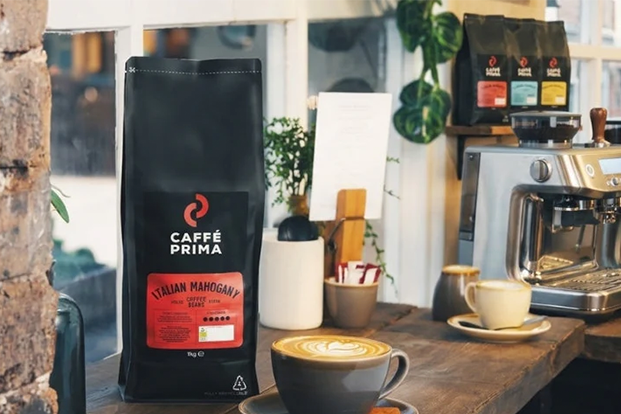
The Continental blend, a dark roast combining Brazilian Arabica and Vietnamese Robusta with dark cocoa and hazelnut notes, starts at £11.99 per kilo, making it one of the most cost-effective options in the UK wholesale market for a genuinely flavourful everyday coffee. The Roma, a medium roast drawing on beans from Brazil, Honduras and Vietnam with citrus and nutty notes, sits at the same price point.
For operators who want to offer something with a stronger single-origin story, the 100% Colombian Mountain-Grown Arabica at £14.99 per kilo delivers a full-bodied medium roast with caramel, hazelnut and almond notes. The Brazilian light roast, smooth and mild with almond and chocolate characteristics, is ideal for Americanos and sits at £13.79 per kilo. For something more distinctive, the limited edition Ethiopian Mocha Arabica, a light-to-medium roast from the Ethiopian highlands, is available at £14.49 per kilo.
Decaf is covered too. The Premium Brazilian Arabica Decaf, a smooth medium roast with milk chocolate notes, is available at £17.49 per kilo, as is the Decaf Espresso, a Mexican and Brazilian Arabica with dark cocoa and hazelnut characteristics.
The range has been recognised in the trade press. Bar Magazine covered Caffé Prima’s premium rebrand, noting the brand’s reputation for quality that cafes and coffee shops are demanding. Public Sector Catering reported on the addition of the Brazilian light roast, describing it as a versatile everyday coffee ideal for a range of service occasions.
All beans are available in 1kg bags or 6kg cases and are dispatched on a next day basis for orders placed before 3pm.
Wholesale Coffee Beans for UK Hospitality and Offices: What Caffé Prima Offers
Caffé Prima is not the cheapest option in the UK wholesale market at any cost. It is not a specialty roaster charging a premium for the sourcing story rather than the cup. It is a small-batch UK roaster, part of the Aimia Foods portfolio, offering a nine-strong range of freshly roasted beans starting at £11.99 per kilo, with free next day delivery on orders over £45, a maximum of six weeks from roast to delivery, and no minimum order commitment. That combination of quality, freshness, range and honest pricing is precisely what the current market is asking for.
For hospitality businesses and offices that have spent two years absorbing coffee cost increases with little prospect of immediate relief, the case for reviewing your current supplier is straightforward. The savings are real, the quality is verified, and the switch requires nothing more than a single kilogram to get started.
To explore the full range, including pricing, roast profiles and case options, visit Caffé Prima wholesale coffee beans page.
Sources:
- International Coffee Organization, Monthly Coffee Market Report, February 2026: https://www.ico.org/documents/cy2025-26/cmr-0226-e.pdf
- International Coffee Organization, Monthly Coffee Market Report, December 2025: https://www.ico.org/documents/cy2025-26/cmr-1225-e.pdf
- World Bank, Commodity Markets Outlook, October 2025: https://www.worldbank.org/en/research/commodity-markets
- Lumina Intelligence, UK Coffee Market Report, August 2025: lumina-intelligence.com
- British Coffee Association, The Squeezed Middle in Food, Drink and Hospitality, 2024/25: bca.org.uk